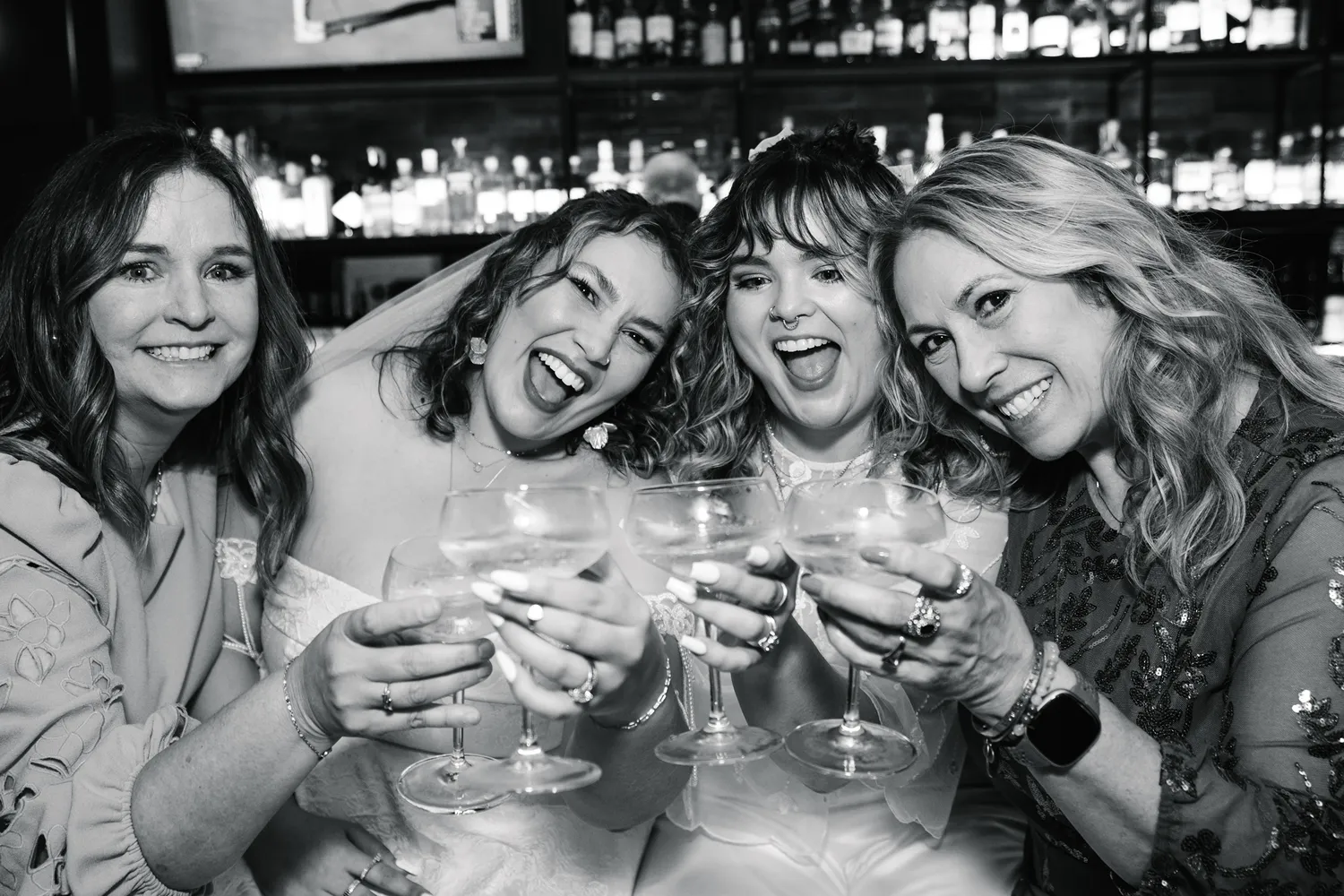
How Hey Love Studio Became a Home for Queer Love
Hey love. Pull up a chair.
Because Hey Love Studio did not start with a five year plan, a perfect brand kit, or one of those “I woke up and chose entrepreneurship” mornings. It started the way a lot of real things start.
Messy. Tender. A little chaotic.
It started with a dusty DSLR sitting in a room in South Korea. It started with frustration, comparison, and that very specific spiral of “everyone else is doing this better than me, so maybe I should quit.” It started with a film camera that changed everything. Then a global pandemic, a complicated immigration love story, and one camera upgrade that made Addie want to scream.
And somewhere in the middle of all of that, we realized something.
We were not just taking pictures.
We were building safety. We were building affirmation. We were building a place where queer couples could show up, breathe out, and stop explaining themselves for five minutes.
A space for us.
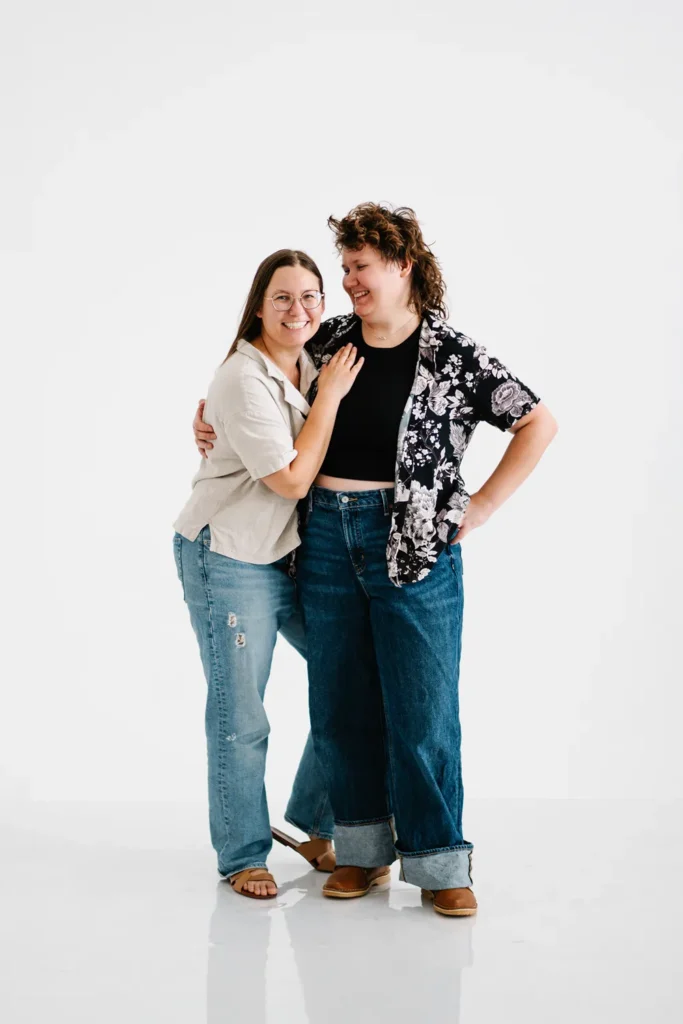
We are Adeline and Valerie Merrick, a queer photo and video duo serving Texas, Arkansas, and wherever your story asks us to go. We built Hey Love Studio because we needed it to exist, and once it did, we realized other people needed it too.
It started with a camera that made Addie want to quit
Back in the early days, Addie got her first DSLR while living in South Korea. She fell in love with taking photos fast. Like, the kind of fast that feels like a new part of your brain turns on.
But the learning curve felt brutal. The kit lens was not giving what it needed to give. The photos did not match what she saw in her head. And comparison did what comparison always does. It made the joy feel smaller.
So she did what a lot of people do when they think they have failed at something they love.
She gave the camera away.
And here is the funny part. Even after the DSLR left, the photographer did not.
Because Addie kept taking photos on her phone. Constantly. And not just snapping and posting. She was editing. She was building her own look. She was basically creating presets before she even knew that was a thing, using apps like VSCO and teaching herself what she liked.
She thought she had quit.
But she was actually practicing.
Quietly. Daily. Like muscle memory.
The film camera that changed the way we see stories
Later, when we met, I gave Addie a 35mm film camera. Something shifted.
Phone photos are quick. Film is slower. Film asks you to pay attention. Film makes you wait. Film makes you commit.
Addie moved from documenting life to telling stories inside it. Street photography became a thing. Lights and shadows became a language. The world started to look like a frame again.
And then, in South Korea, something wild happened.
Addie got published in a local magazine in Jeonju. Not even from fancy gear. From iPhone photos she edited herself. From collages she created because she loves making art that feels layered and alive.
One feature was connected to a traditional Korean hanok stay. Another was a film festival. And somewhere in that season, photographing people started to hit different.
Because photographing someone you love, in a moment that matters, is not about sharpness or settings.
It is about truth.
The pandemic, immigration, and the camera that became our turning point
Fast forward. We wanted to get married. Our lives and careers could not make it easy. Then COVID happened, and suddenly the whole world was rearranging itself.
We came to the U.S. planning to get married and return to Korea. But immigration is never simple, and we ended up shifting plans, working through visa changes, and building a life while waiting for the paperwork to catch up.
And while we were in that waiting season, we finally got our first professional mirrorless camera.
A Sony a7 IV.
The camera we still shoot with. The camera we love like a tiny chaotic family member.
I was teaching at the time and spent basically an entire paycheck on it, because we believed in what Addie was becoming, even if we did not have all the details mapped yet.
And then Addie tried it with the kit lens and immediately hated it.
Like, deeply. Viscerally. Ten years of dreaming about “a real camera,” and it felt like the same old story again. The photos were not matching the vision. The joy felt threatened.
But this time we did not quit.
This time we pivoted.
Addie bought a prime lens next. Then another. Then she started learning what she actually wanted to make, who she wanted to make it for, and why this needed to be more than a hobby.
Because this was the truth.
She did not want to do anything else.
Our first clients taught us what we were really here to do
A lot of people assume we began as wedding photographers. We did not.
We started with families.
One of the earliest sessions that stayed with us was photographing a teacher friend’s daughter. She is non-verbal and communicates in her own ways. Her favorite place was Chick-fil-A, and her family built a whole day around her joy and comfort. They went at an off-peak hour so she would not get overstimulated. Mom made her an outfit. Dad took off work.
Those photos mattered because they were not just “everyone stand in a line and smile.”
They were evidence of love.
They captured accommodation as devotion. They captured chosen pacing. They captured care.
And we realized this is what we want our work to hold.
Not perfect posing.
Presence.
We still believe this. In family sessions, in weddings, in newborn days, in 90th birthdays, in puppy photos before a goodbye. The images that land hardest are always the ones where people are engaging with each other, not performing at each other.
That is the whole heartbeat of Hey Love Studio.
Why “Photos by Adeline” never fit
At first, the business name was Photos by Adeline. Which is honestly how a lot of photographers start. It is industry standard. It is simple.
It also felt wrong.
Because it was never just Addie. It was always us. It was our clients. It was our home. It was our cats. It was the way we work as a team, the way we care, the way we build systems and protect people’s memories.
Also, logistical reality. Addie was booking fast. Like, picked up the camera in November and was fully booked by April fast. She was thriving in the creative part, and I joined because the backend needed structure. Client emails. Workflow. SD card management. Delivery. The unglamorous stuff that keeps a business safe.
Signing emails as Valerie from Photos by Adeline was… weird. Not bad. Just not true.
We wanted a name that held both of us.
A name that sounded like the way we talk.
A name that felt like an exhale.
The moment Hey Love Studio became real
We spent a long time hating our name. Months. Maybe longer. We asked friends. We brainstormed. We tried to force it. Nothing fit.
We did not want something generic. We did not want the “timeless, classic” wedding brand thing. We did not want a name that sounded like every other studio in the search results.
We wanted a name that spoke to our people.
The people who want warmth. The people who want to feel safe. The people who do not want to be shoved into a bride and groom script. The people who want to be celebrated without conditions.
And then one day, in the middle of a list of terrible options, we saw it.
Hey Love Studio.
Right there.
And we both knew. That was the first time it felt like a yes in our bodies.
Because “hey love” is what we say. It is how we greet each other. It is how we soften a hard day. It is how we show care without making it heavy.
It is warm. It is human. It is direct. It is ours.
So we took it.
And everything clicked into place.
What it means to build “a space for us”
When we say we built a space for us, we mean this.
We wanted a studio where queer couples do not have to translate their love into something palatable. Where pronouns are normal. Where chosen family gets centered with care. Where nobody assumes roles or traditions. Where your connection matters more than a Pinterest pose.
This is not a vibe. It is a practice.
There are resources that talk about why pronouns matter and how to ask respectfully, and we love seeing that language become more normalized in culture.
But we also know queer couples are tired.
Tired of being the educator. Tired of scanning websites for safety cues. Tired of wondering if “LGBTQ friendly” means “we will behave” or “we will celebrate you fully.”
So we built the kind of vendor experience we wished we had.
And then we kept building. Through weddings. Through families. Through little moments that turn out to be huge later.
Over time, Hey Love Studio became more than a business name.
It became a promise.
If you’re a creative, here’s what we learned the hard way
We get messages from photographers and creatives who want to build an affirming business and do it with integrity. Here are the truths we live by, pulled straight from our early years.
Start with one good camera and one good lens. Buy used when you can. A reliable zoom lens can carry a lot of early work, and used gear makes the jump more accessible.
Build a system that protects people’s memories. Dual card slots matter when you photograph anything you cannot redo. Backups matter. Workflow matters. Not because it is glamorous, but because your clients deserve care.
Put yourself in the community, but do it with intention. Networking events are fine. Pride events, nonprofit work, and community spaces are where your people already are. Show up there. Offer support. Make art. Build trust.
Price like you have a business, not a hobby. Your gear has a lifespan. Your time has value. Your editing hours count. The race to the bottom hurts everyone, especially newer artists who are trying to survive.
Find a mentor who can tell you the truth without crushing you. You need someone who can celebrate your strengths and also give you a path forward when you feel stuck.
Compare yourself to yourself. Let your work evolve. If you chase everyone else’s style, you will burn out fast.
And please hear us on this.
If you want to build a space for marginalized people, you have to build it with them, not just market to them.